Protests took place in Tel Aviv, Jerusalem, Haifa, and Beersheba, as a survey found broad but uneven support among Jewish Israelis for Operation Roaring Lion.
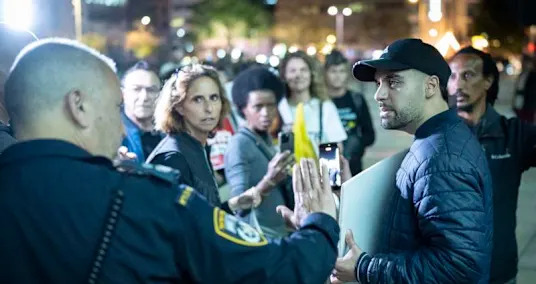
Israel Police arrested 21 anti-war protesters Saturday night as demonstrations against the conflict with Iran expanded in multiple cities despite restrictions on public gatherings.
Protests took place in Tel Aviv, Jerusalem, Haifa, and Beersheba, with hundreds of participants reported in Tel Aviv and Jerusalem and about 100 in Haifa, marking the largest turnout since weekly demonstrations began. Authorities said 13 people were arrested in Tel Aviv and eight in Haifa.
Police said the gatherings were not approved under Home Front Command regulations that ban events with more than 50 people. Officials said the increase in turnout followed calls by groups opposing the government to protest despite the restrictions.
“During a situation assessment that took place at the scene with a Home Front Command representative… it was clarified that there was a real risk to human life and accordingly, Yarkon [precinct] police commander Tzachi Sharabi ordered the gathering to be dispersed,” police said.
Hadash-Ta’al chairman Ayman Odeh, an Arab lawmaker involved in the protests, criticized the police response, calling officers fascists “in the service of the government” and saying they were afraid of “the heroic citizens who went out, despite everything, to make their voice heard.”

Survey shows broad, uneven support for war
The demonstrations come as a March 2026 survey by the Israel Democracy Institute found broad but uneven support among Jewish Israelis for Operation Roaring Lion. Support was strongest on the Right at 87% and about half on the Left.
The survey also found that Jewish and Arab respondents largely agreed that Iran’s resilience has been stronger than expected. Most Jewish respondents said Israeli society could sustain the campaign for up to one month, while 28% said as long as needed. Arab respondents were less optimistic about how long the public could endure the conflict.
A majority of Jewish respondents said Prime Minister Benjamin Netanyahu’s decision was driven by security considerations, while most Arab respondents viewed it as political.
LATEST POSTS
- 1
 Gym tied to outbreak of obscure disease that spreads through mist
 - 2Sean Penn lights up, Kylie Jenner gets A-list approval and 7 other moments you didn’t see at the Golden Globes
- 3Bolsonaro briefly leaves Brazilian prison for medical tests after a fall from his bed
- 4'Wow!' The eye surgery marathon that restored sight for some South Africans
- 5Step by step instructions to Pick an Incineration Urn: Variables to Consider




- 6 Exercises to Anticipate in 2024
- Man threatens attack on German high-speed train, 12 lightly injured
- Vote in favor of your Favored Kind of Scarf
- Experience Unrivaled Sound: Top Speakers You Really want to Hear
- Holiday weather forecast: Where travelers can expect a wintry mix, flooding and record warmth across the U.S.
- The Strait of Hormuz Isn’t Just an Oil Problem, It’s Now a Food Problem
- The most effective method to Distinguish the Best Material Organization in Your Space
- The Fate of Rest: Patterns in Shrewd Beds
- Baikonur launch pad damaged after Russian Soyuz launch to International Space Station