A launch pad at Russia’s main space complex was damaged during Thursday’s launch of a mission carrying two Russians and an American to the International Space Station, Moscow’s space agency announced.
The Soyuz MS-28 spacecraft successfully docked with the space station and the three crew members had boarded, Roscosmos said.
But a post-launch inspection at the Baikonur Cosmodrome in Kazakhstan revealed “damage to several elements of the launch pad,” according to a statement from Roscosmos, which still uses the space facility in its former Soviet neighbor.
“An assessment of the condition of the launch complex is currently underway,” it said, adding that all parts needed to repair the pad are available.
“The damage will be repaired in the near future.”
The launch pad contains support systems for the rocket and a structure that allows cosmonauts to access their capsule as it sits atop a Soyuz rocket.
Launch pads must be capable of withstanding extreme heat, air pressure and vibrations as a rocket takes flight.
Russian analysts said repairs to the launch pad could take a week or longer. And any lengthy delay could leave Russia unable to launch missions to the space station, they said.
“In the worst case this could seriously affect the rotation of crewed missions and cargo flights to the ISS,” analyst and blogger Georgy Trishkin wrote on Telegram.
Typically, ISS crew are launched roughly every six months from Baikonur.
“This is the only launch pad Roscosmos uses for the ISS program, and in the future it was supposed to be used for launches to the Russian Orbital Station,” commentator Vitaliy Egorov wrote on Telegram.
“In effect from this day Russia has lost the ability to launch humans into space, something that has not happened since 1961. Now it will be necessary to quickly repair this launch table or modernize another one,” Egorov wrote.
Besides Russia’s Soyuz craft, NASA uses SpaceX’s Dragon spacecraft to take crew to the ISS.
The three men aboard the mission that lifted off Thursday join seven other crew already orbiting on the ISS.
Three are scheduled to return to Earth by December 8, according to NASA.
For more CNN news and newsletters create an account at CNN.com
LATEST POSTS
- 1
 Israel says 40 Hezbollah members killed as forces advance in Lebanon
 - 2'A prank': Israel Police detain suspect for shooting rubber bullets at Ashkelon kindergarten
- 3Southern Californians, your health insurance costs could rise in 2026
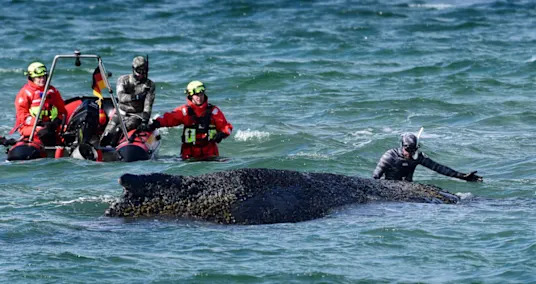
- 4It Shouldn’t Be Here: Rescuers Race to Save Whale Stranded in Rare Spot
- 5The Universe of Impeccable Pearls: A Manual for Valuable Gems




- Shadow Cats: The Elusive Leopards Surviving Against Impossible Odds
- A red meat allergy from tick bites is spreading – and the lone star tick isn’t the only alpha-gal carrier to worry about
- From Sea shores to Urban areas: Astonishing Worldwide Travel Objections
- 5 Home EV Chargers for Proficient and Solid Charging
- Artemis 2 astronauts are now headed to the moon. Why has it taken humanity so long to go back?
- The most effective method to Decisively Plan Your Nursing Profession for the Best Compensation Results
- How to watch Dick Clark’s New Year’s Rockin’ Eve with Ryan Seacrest: Start time, TV channel, performers and more
- UPM Adhesive Materials plans new facility near New Delhi, India
- Figure out How to Use Your Nursing Abilities for Better Compensation