When you buy through links on our articles, Future and its syndication partners may earn a commission.

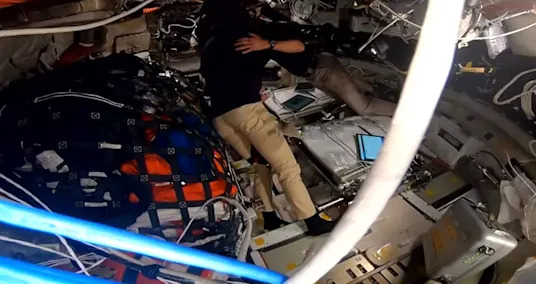
HOUSTON, Tex. — Today (April 6), as NASA's Artemis 2 astronauts had their names etched into history books for becoming the farthest-ever humans from Earth, they took a moment to recognize the milestone by remembering someone no longer with us.
The previous distance record was held by Apollo 13, which traveled 248,655 miles (400,171 kilometers) from Earth at the farthest point of its mission. The Artemis 2 astronauts just surpassed that, marking the occasion with a teary-eyed dedication.
"A number of years ago, we started this journey in our close-knit astronaut family and we lost a loved one," Artemis 2 mission specialist Jeremy Hansen said to mission control. "Her name was Carroll: the spouse of Reid, the mother of Katie and Ellie."

Hansen was referring to Artemis 2 mission commander Reid Wiseman's wife, who tragically died of cancer in 2020. The crewmembers together requested naming a crater they identified on the moon after her.
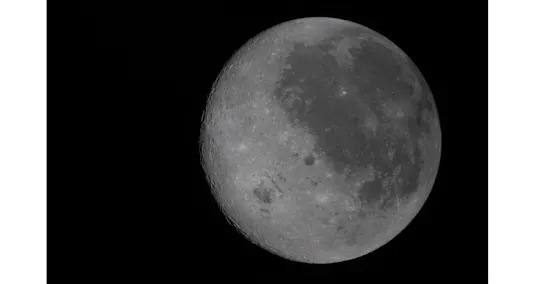
Northwest of the moon's Glushko crater, on the same latitude as the Ohm crater, sits the proposed "Carroll" crater. Hansen called the crater a "bright spot" along the moon's near side that can be seen from Earth. As his crewmate spoke, Wiseman reached over to put a hand on Hansen's shoulder, as each member of the Artemis 2 crew moved into a collective embrace.
The mission's crewmembers chose to name a different crater after their Orion spacecraft, named Integrity.
As the astronauts wiped tears from their eyes, NASA's mission control responded to their transmission: "Integrity and Carroll Crater, loud and clear."

Orion's closest approach to the moon will take place later Monday, bringing the crew within about 4,000 miles (6,440 kilometers) of the lunar surface. That flyby begins at 7:02 p.m. EDT (2302 GMT), and will last a little more than three hours.
During that time, Orion will also reach its farthest distance from Earth, flying at a staggering 252,760 miles (406,778 kilometers) away from our home planet.
The crew's lunar observations are expected to wrap up at 9:20 p.m. EDT (0120 GMT, April 7), at which point, they'll officially be on their way back to Earth.
LATEST POSTS
- 1
 The Most recent Microsoft Surface Star PC: Ideal for Top of the line Planning and Gaming Needs
 - 2IDF destroys regime's missile, sea mine production site in Yazd amid nationwide airstrikes
- 3What Middle East Conflict Could Mean For The World’s Largest Whale Shark Gathering
- 4Step by step instructions to Advance the Eco-friendliness of Your Kona SUV
- 56 Home Cleaning Administrations to Keep Your Home Unblemished





- Lawsuit claims ChatGPT exacerbated man's delusions leading to murder-suicide
- Investigating Cooking and Culinary Expressions: An Excursion Through Flavors
- What causes RFK Jr.’s strained and shaky voice? A neurologist explains this little-known disorder
- Creativity Revealed: A Survey of \Making Shocking Looks\ Cosmetics Item
- CDC changes kids' vaccine schedule, removing universal recommendation for some shots
- Israeli forces kill one person in series of attacks on southern Lebanon
- Images of Bangladeshi motorcyclists sleeping at petrol pumps are AI-generated
- Data centers in space: Will 2027 really be the year AI goes to orbit?
- The moon up close: How the Artemis 2 astronauts are photographing their historic lunar flyby